
Why Walking Barefoot is Not Crazy. It is Biology.
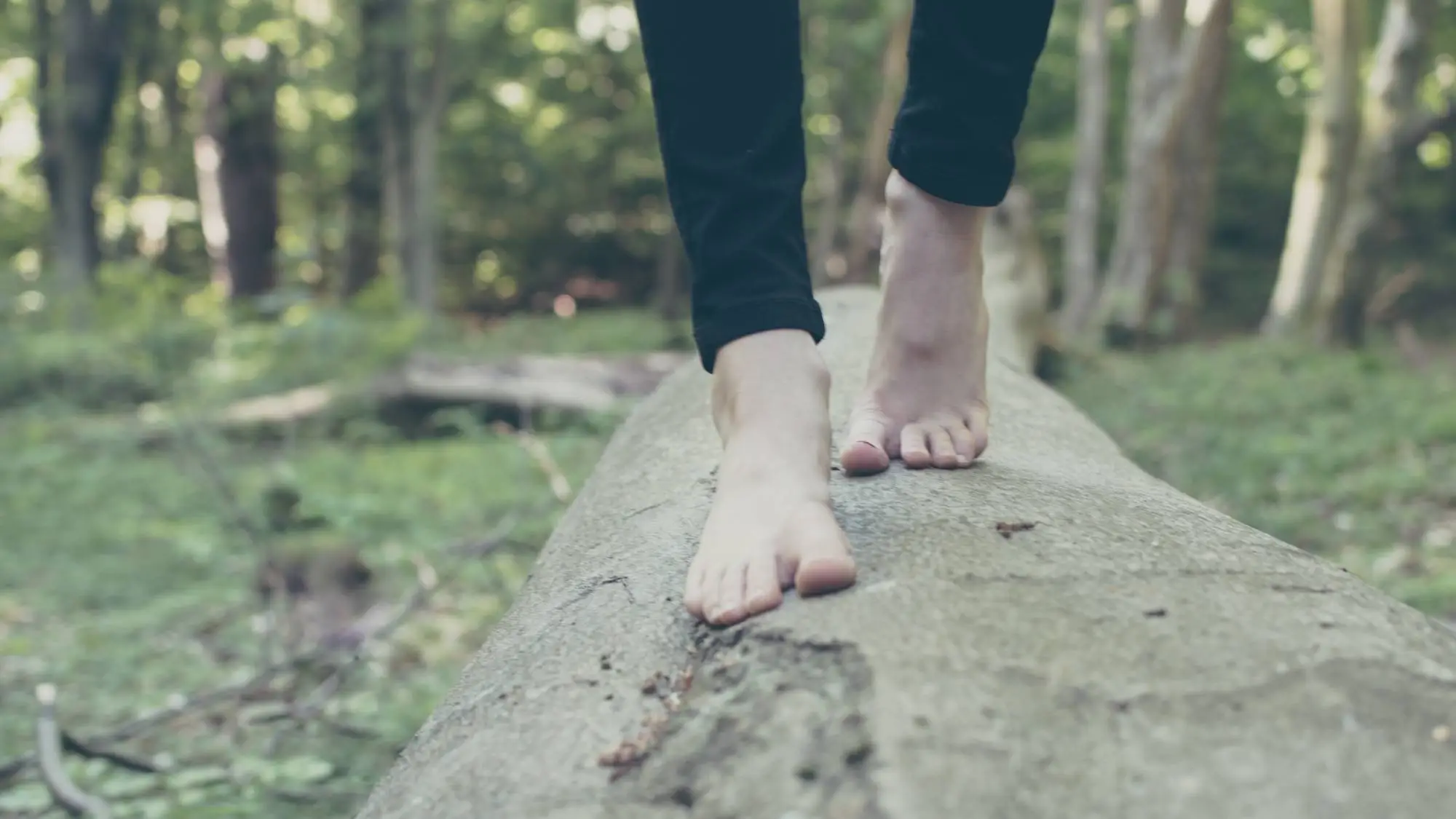
Let me describe something that would have been completely unremarkable for the vast majority of human history but that will get you strange looks in almost any modern public space.
Taking your shoes off and walking on the ground.
That is it. That is the radical act. Feeling the earth under your feet the way every human being who ever lived felt it until about 150 years ago when the modern shoe industry decided that the human foot needed to be encased in a rigid, elevated, heavily cushioned box in order to function properly.
The human foot did not get that memo. And it has been paying the price ever since.
The Most Complex Structure You Never Think About
The human foot is an extraordinary piece of biological engineering. Each foot contains 26 bones, 33 joints, and more than 100 muscles, tendons, and ligaments. It is one of the most densely innervated parts of the human body, packed with sensory receptors that provide constant feedback to the brain about terrain, balance, pressure, and movement.
That sensory richness is not accidental. It evolved over millions of years because the information coming from your feet is essential to how your entire body organizes itself in space. The foot is not just a platform you stand on. It is a sophisticated sensory organ that communicates constantly with your brain, your spine, your hips, and your entire musculoskeletal system.
When you put that sensory organ inside a thick soled, heavily cushioned, motion controlling shoe you essentially blindfold it. You cut off the information stream that your nervous system depends on to coordinate movement efficiently and safely. And then you wonder why your knees hurt, your hips are tight, your back aches, and your balance is not what it used to be.
What Modern Shoes Actually Do to Your Feet
The modern athletic shoe, despite decades of sophisticated marketing around support and cushioning and motion control, has a genuinely poor track record when it comes to foot health. Plantar fasciitis, bunions, hammertoes, Morton's neuroma, chronic ankle instability, knee pain, hip dysfunction. These conditions are epidemic in populations that wear modern shoes and essentially nonexistent in populations that do not.
A few specific things worth understanding about what conventional footwear does to the human foot:
The elevated heel changes everything. Most conventional shoes, including athletic shoes that do not look like heels, have a significant heel to toe drop. This means the heel sits higher than the forefoot. Over time this shortens the Achilles tendon and calf muscles, tilts the pelvis forward, compresses the lumbar spine, and fundamentally alters the way you walk. The human body evolved to walk with the heel and forefoot at the same height. Elevating the heel is not a neutral intervention. It is a significant alteration of your biomechanics with consequences that ripple up your entire kinetic chain.
The cushioned sole removes ground feedback. Thick cushioning between your foot and the ground eliminates the sensory information your nervous system needs to modulate force and coordinate movement. Studies have shown that people actually strike the ground harder in cushioned shoes than in minimal footwear because the brain compensates for the lack of sensory feedback by increasing impact force. The cushioning that was supposed to protect your joints may actually be contributing to the impact forces that damage them.
The toe box compresses your toes. Most conventional shoes narrow significantly toward the toe, squeezing the toes together in a way that deforms the foot over time. The human foot in its natural state has toes that splay wide on ground contact, distributing load across the full width of the foot and providing a stable base. Compressed toes cannot do this. Bunions, the misalignment of the big toe that is now extremely common, are essentially unknown in populations that do not wear shoes.
The rigid sole prevents natural foot flexion. The foot evolved to flex and articulate across its full range of motion with every step. A rigid soled shoe prevents this, weakening the intrinsic muscles of the foot over time and reducing the foot's capacity to absorb and distribute load naturally.
The Ancestral Context
For virtually all of human history humans were either barefoot or wearing minimal footwear. Sandals, moccasins, thin soled hide wrappings. Footwear that protected the sole from sharp objects and extreme temperatures while preserving ground contact, sensory feedback, and the natural mechanics of the foot.
Hunter gatherer populations that have been studied by researchers show foot health that is dramatically better than that of shod populations. Wide toe splay, strong intrinsic foot muscles, flexible arches, and a complete absence of the chronic foot and lower limb conditions that are epidemic in modernized populations.
Indigenous peoples across the Americas, Africa, Asia, and beyond developed extraordinarily sophisticated relationships with the ground through minimal footwear and barefoot movement. The foot's ability to read terrain, to adapt to varied surfaces, to provide proprioceptive information that coordinates whole body movement, was not a liability to be managed with technology. It was a fundamental capability to be developed and relied upon.
The Tarahumara people of northern Mexico, who have become famous in the western world through Christopher McDougall's book Born to Run, run extraordinary distances in minimal sandals made from tire rubber. Their running form, their foot health, and their absence of the chronic running injuries that plague western runners in expensive athletic shoes has been studied extensively and points consistently to the same conclusion. The human foot works better when it is allowed to function the way it evolved to function.
What Happens When You Start Going Barefoot
The transition back to barefoot and minimal footwear is not something to rush. Decades of conventional shoe wearing weakens the intrinsic muscles of the foot and shortens the soft tissues of the lower leg. Going from a heavily cushioned shoe to barefoot overnight is a recipe for injury.
But done gradually the transition produces changes that most people find remarkable.
The intrinsic muscles of the foot strengthen. The arch, which conventional wisdom tells us needs external support, is actually a dynamic structure that functions best when the muscles that create and maintain it are strong and active. Those muscles atrophy inside supportive shoes. They come back to life when the foot is allowed to work.
Ground feel returns. The sensory richness of barefoot contact with varied surfaces is something that most people in modern shoes have simply never experienced as adults. Walking on grass, on soil, on sand, on gravel. Each surface provides a different quality of sensory input that wakes up the nervous system in ways that feel genuinely novel and deeply pleasant. There is a reason that walking barefoot in nature feels so fundamentally good. Your nervous system is receiving information it has been starved of.
Gait mechanics improve. Without the elevated heel and rigid sole of conventional shoes most people naturally shift toward a forefoot or midfoot strike pattern rather than the heel striking gait that modern shoes encourage. This reduces impact forces on the knee and hip and distributes load more efficiently through the foot and lower leg.
The whole body reorganizes. Because the foot is the foundation of the entire kinetic chain changes in foot mechanics ripple upward. Hip mobility often improves. Chronic knee pain frequently resolves or reduces. Lower back pain, which is often downstream of altered pelvic mechanics caused by heel elevation, can improve dramatically.
Grounding and the Electrical Connection
There is one more dimension of barefoot contact with the earth that deserves mention even though it sits outside conventional biomechanics.
Grounding, also called earthing, refers to the direct electrical connection between the human body and the surface of the earth that occurs during barefoot contact with natural ground. The earth carries a mild negative electrical charge and research suggests that this connection may have measurable physiological effects including reduction of inflammation, normalization of cortisol rhythms, improvement in sleep quality, and reduction of chronic pain.
The mechanism involves the transfer of free electrons from the earth's surface into the body where they act as antioxidants, neutralizing free radicals and reducing the oxidative stress that underlies chronic inflammation.
This research is still developing and the mainstream medical establishment has been slow to engage with it. But the studies that exist are intriguing and the biological plausibility is real. For virtually all of human history direct skin contact with the earth was a constant feature of human existence. We slept on the ground. We walked barefoot. We worked the soil with our hands. The electrical insulation from the earth that modern rubber and synthetic soled shoes provide is genuinely novel in human evolutionary history and the consequences of that insulation are worth taking seriously.
How to Start
If you want to begin transitioning toward more barefoot and minimal footwear here is a sensible approach.
Start indoors. Walk barefoot around your home as much as possible. This begins strengthening the intrinsic muscles of the foot without the challenge of varied outdoor terrain.
Spend time barefoot outdoors on natural surfaces. Grass, soil, sand. Start with short sessions and build gradually. Pay attention to how different surfaces feel and notice the sensory richness of that contact.
Consider minimal footwear for everyday use. Shoes with a zero drop sole, meaning no heel elevation, a wide toe box that allows natural toe splay, and a thin flexible sole that allows ground feel represent a significant improvement over conventional footwear without requiring you to go fully barefoot in situations where foot protection is practical.
Strengthen your feet deliberately. Toe spreading exercises, single leg balance work, calf raises through full range of motion, and time spent in a deep squat all contribute to the foot and lower leg strength that supports a healthy transition.
Be patient. If you have worn conventional shoes your entire adult life your feet have adapted to that environment. The return to natural foot function takes time and the transition should be gradual. Some temporary discomfort in the feet and calves is normal. Sharp pain is not.
The Bottom Line
Your feet are not broken. They do not need to be supported, corrected, cushioned, and controlled by expensive technology. They need to be used the way they evolved to be used, in contact with the ground, sensing the world beneath them, strong and flexible and alive.
Taking your shoes off is a small act with surprisingly large consequences. It connects you to the ground in a way that is literally ancestral, that your nervous system recognizes and responds to, and that sets off a cascade of biomechanical and physiological improvements that no shoe technology can replicate.
It is also free. Which in a wellness industry that will happily sell you an expensive solution to every problem, feels worth noting.
Start small. Go outside. Take your shoes off. Feel the ground.
Your feet have been waiting.

David Atlas is an ancestral health and movement coach and permaculture farmer. After years of living close to the land and helping others reverse metabolic disease through ancestral approaches to food and movement, life pulled him in a different direction. A difficult transition, a new city, and the slow drift of the standard American diet led to a type 2 diabetes diagnosis in 2026.
Instead of keeping it private, he started a podcast. Undomesticated documents his real time return to primal living; from inside a city, on a budget, with a bread-loving spouse; and brings in the best voices in ancestral health, wild food, natural movement, and human rewilding along the way.
David knows this world from the inside. He also knows what it looks like when it falls apart. That combination is what makes Undomesticated worth listening to.
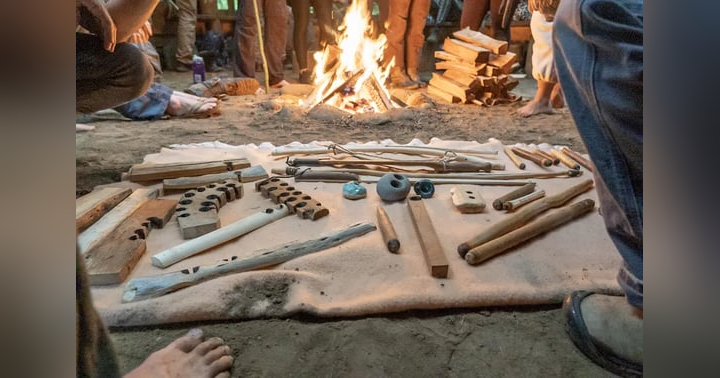
Primitive Skills Are Not About Survival. They Are About Being Human.