Primitive Skills Are Not About Survival. They Are About Being Human.
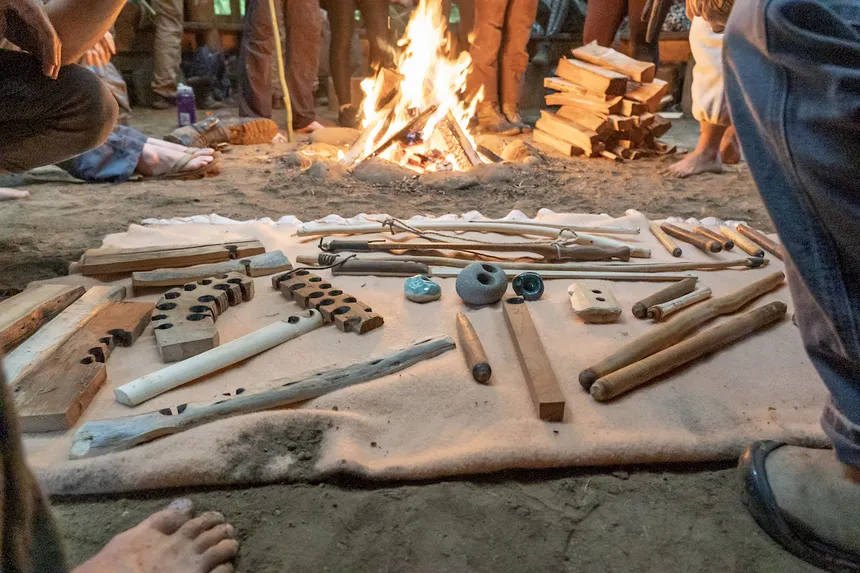
When most people hear the term primitive skills they picture a bearded man in the woods rubbing sticks together while muttering about the apocalypse. They picture survivalists and preppers and people who have decided that civilization is about to collapse and they had better be ready.
That framing misses the point almost entirely.
Primitive skills are not primarily about surviving without modern infrastructure. They are not about preparing for disaster or proving how tough you are or opting out of civilization. They are about something much more fundamental and much more relevant to the lives of ordinary people living in ordinary modern circumstances.
They are about what it feels like to be a competent human animal. And that feeling, it turns out, is something that a remarkable number of people are quietly starving for.
What We Actually Are
For the vast majority of human existence every person alive possessed a remarkable range of practical competencies. They could make fire. They could find and identify food in the landscape around them. They could build shelter from available materials. They could track animals, read weather, navigate by stars, work with plant fibers, prepare hides, make tools. These were not specialized skills possessed by experts. They were the common inheritance of every human being, passed from generation to generation as the basic vocabulary of being alive.
This competence was not incidental to human experience. It was central to it. The daily exercise of practical skill in relationship with the natural world was how humans spent most of their waking hours for hundreds of thousands of years. It shaped our neurology, our psychology, our sense of self and agency and place in the world.
The human brain evolved in the context of this kind of engagement. Problem solving with the hands and body in a real physical environment. Reading complex natural systems and responding to them with learned skill. The satisfaction of producing something necessary from raw materials through knowledge and effort. These are not peripheral human experiences. They are core ones. And they are almost entirely absent from modern life.
What Modern Life Did
The industrial revolution and everything that followed it represents the most rapid and radical transformation of human daily experience in the history of our species. In the space of a few generations we outsourced virtually every practical competency that humans had carried since the beginning.
We no longer make fire. We flip a switch. We no longer find or grow or process food. We buy it in packages. We no longer build shelter. We hire contractors or sign leases. We no longer make clothing, or tools, or medicine, or any of the thousand things that previous generations produced through their own knowledge and labor.
This outsourcing has made life in many ways easier and more comfortable. I am not romanticizing poverty or pretending that grinding grain by hand is preferable to a grocery store. But something real was lost in the transaction and I think most people feel that loss even if they have never named it clearly.
What was lost was the daily experience of competence. The felt sense of being someone who can do things. Who can read the world around them and respond to it effectively. Who possesses knowledge that matters and skills that work. Who is not entirely dependent on systems and supply chains and other people's expertise for every basic need.
That felt sense of competence is not a luxury. It is a psychological necessity. And its absence is doing real damage to people in ways that show up as anxiety, purposelessness, depression, and a quality of disconnection from life that is hard to articulate but impossible to ignore once you feel it clearly.
What Happens When You Make Fire With Your Hands
I want to describe something that I have witnessed dozens of times teaching primitive skills and that never gets old no matter how many times I see it.
Someone picks up a bow drill for the first time. They are skeptical, probably a little embarrassed, almost certainly convinced it is not going to work. They follow the instruction. They work the bow back and forth, generating friction between the spindle and the hearth board. The smoke starts. They keep going. A coal forms in the notch. They transfer it to a tinder bundle with shaking hands, fold it closed, and blow. And fire appears.
What happens in that moment is not subtle. People cry. Grown adults, competent professionals, people who manage teams and run companies and navigate complex modern lives. They make fire with a stick and they cry.
I have thought about why that is for a long time. And I think what is happening in that moment is a recognition. Something in the nervous system recognizes this as real in a way that most of modern life is not. You did something that your ancestors did. You used knowledge and your own body to produce something necessary from nothing. You closed a loop that has been open since the last time a human being in your lineage made fire this way, which might have been your great great grandmother or might have been someone ten thousand years ago.
The tears are not sentimentality. They are your nervous system coming home.
The Neuroscience of Making Things
The brain science here is worth understanding because it explains why primitive skills feel the way they feel and why that feeling matters beyond the romantic.
The human brain has a system sometimes called the doing circuit or more formally the sensorimotor reward system that is specifically activated by the successful completion of physical tasks with the hands. This system evolved in the context of exactly the kind of practical skill based engagement that primitive skills represent. Making tools, processing food, building structures, working with fiber and hide and wood. These activities light up the brain in a way that passive consumption simply does not.
Neuroscientist Kelly Lambert has done extensive research on what she calls effort based rewards, the neurological satisfaction that comes specifically from producing tangible outcomes through physical effort and skill. Her work suggests that the epidemic of depression and anxiety in modern life is partly a consequence of the mismatch between the kind of engagement our brains evolved to find rewarding and the largely passive, screen based, effort free consumption that characterizes most modern daily experience.
When you make fire by friction you are not just making fire. You are activating neurological reward circuits that evolved over millions of years and that rarely get activated in the course of a normal modern day. The satisfaction is real, it is biological, and it is not something you can get from buying a fire starter kit at REI.
There is also the proprioceptive and sensory dimension. Primitive skills require a quality of present moment attention that is genuinely rare in modern life. You cannot make a bow drill fire while thinking about your email. You cannot knap flint while scrolling your phone. The skill demands your full presence in a way that most modern activities do not and that presence, that absorption in a real physical task in the real physical world, is itself profoundly regulating for the nervous system.
Skills as Relationship
There is another dimension of primitive skills that I think is even more important than the neurological one and that almost never gets discussed in the survival skills context.
Primitive skills are a form of relationship. With specific plants and animals and materials. With particular places and their seasonal rhythms. With the knowledge itself and the lineage of people who carried it before you.
You cannot learn to make fire by friction from a YouTube video and fully understand it. Not because the information is not there but because the knowledge lives in the body as much as the mind. It has to be transmitted through actual doing, ideally in relationship with someone who already knows how. And the process of that transmission, of being taught by someone who was taught by someone, connects you to a chain of human knowledge that stretches back further than recorded history.
When I learned certain skills from Carl, an Abenaki elder I studied with, I was receiving something that had been passed hand to hand across more generations than either of us could count. The skill was not just a technique. It was a relationship. With the knowledge, with the teacher, with the tradition, with the land that the knowledge came from.
That quality of relationship is something that no amount of online learning or weekend workshop can fully replicate. It requires time and presence and genuine commitment. But even a first encounter with a primitive skill, done with real attention and intention, plants a seed of that relationship that can grow into something much deeper.
Primitive Skills in a Modern Life
I want to address the practical question that I know is on the minds of most people reading this. You live in a city or a suburb. You do not have acres of land or a forest out your back door. You have a job and a family and a schedule that does not leave much room for extended time in the woods learning to tan hides.
Does any of this apply to you?
Yes. Completely.
Primitive skills are not exclusively wilderness pursuits. Many of them can be practiced in a backyard, a city park, a kitchen, or even an apartment. And more importantly, the orientation that primitive skills cultivate, the quality of attention to the natural world, the willingness to engage with physical materials through knowledge and effort, the practice of present moment engagement with real tasks, can be developed anywhere.
Fire making requires only a specific set of dry materials and a small outdoor space. Many people make bow drill fire on apartment balconies. Plant identification and foraging can be practiced in any urban environment. Most midwestern and eastern cities have a remarkable diversity of edible and useful plants growing in parks, vacant lots, and along roadsides that most people walk past every day without seeing.
Cordage making from plant fibers can be done at a kitchen table. Knot tying is as applicable in a city as anywhere. Basic tracking and natural awareness can be developed on walks through any park. Basket weaving, hide tanning, flint knapping, pottery. Many of these can be pursued in urban environments with materials that are more accessible than most people realize.
The point is not to become a full time primitive skills practitioner living off the land. The point is to bring some of this quality of engagement back into your life. To begin recovering the felt sense of being someone who can do things. Who possesses knowledge that works. Who is in relationship with the natural world in a way that goes beyond recreation or aesthetics.
Where to Start
If you want to begin exploring primitive skills here are the most accessible starting points regardless of where you live.
Plant identification is probably the single most immediately rewarding entry point. Learning to identify the edible and useful plants in your local environment gives you a relationship with the landscape around you that transforms how you move through it. A walk through a city park becomes a completely different experience when you can name the plants and know their properties. Resources like Samuel Thayer's books on wild edibles are among the best available and are rooted in genuine depth of knowledge rather than the casual identification guides that can get people into trouble.
Fire by friction is the skill that most reliably produces the nervous system response I described earlier. It requires finding or sourcing the right wood combinations for your region, learning the technique, and practicing with real commitment. It is not easy. That difficulty is part of the point. The local dead wood in any park or wooded area is your starting material and there are teachers and workshops in most regions for anyone who wants in person instruction.
Cordage making from plant fibers is accessible, meditative, and genuinely useful. Dogbane, stinging nettle, and many other common plants produce strong natural fiber. Learning to process and twist cordage by hand connects you to one of the oldest technologies in human history and can be done anywhere.
Tracking and awareness practices are perhaps the most transferable to everyday urban life. Learning to read animal sign, to notice what is present and absent in a landscape, to move quietly and observe carefully. These skills sharpen a quality of attention that improves everything else.
The Return of Human Agency
I want to close with something that I think is the deepest reason primitive skills matter in the modern world.
We live in a time of profound learned helplessness. Most people in the developed world are entirely dependent on complex systems they do not understand for every basic need. Food, warmth, shelter, medicine, water. The infrastructure of modern life is extraordinary in what it provides and catastrophically fragile in what it requires. But beyond the practical vulnerability that dependence creates there is a psychological cost that I think is rarely named directly.
When you cannot do anything for yourself. When every need is met by a system or a service or a product that someone else produces. When your hands are never required to engage with the real physical world in a way that produces anything necessary. Something in you atrophies. Something that was central to human experience for hundreds of thousands of years goes quiet.
Primitive skills wake that thing back up. Not because you are going to need to make fire in a grid down scenario, though you might. But because the experience of being genuinely competent in the physical world, of possessing knowledge that works, of being in relationship with the materials and plants and processes of the natural world through skill and attention, is part of what it means to be a fully realized human animal.
You were made for this. Your hands know it even if your mind has forgotten.
Start with a stick. Make some fire. Come home.
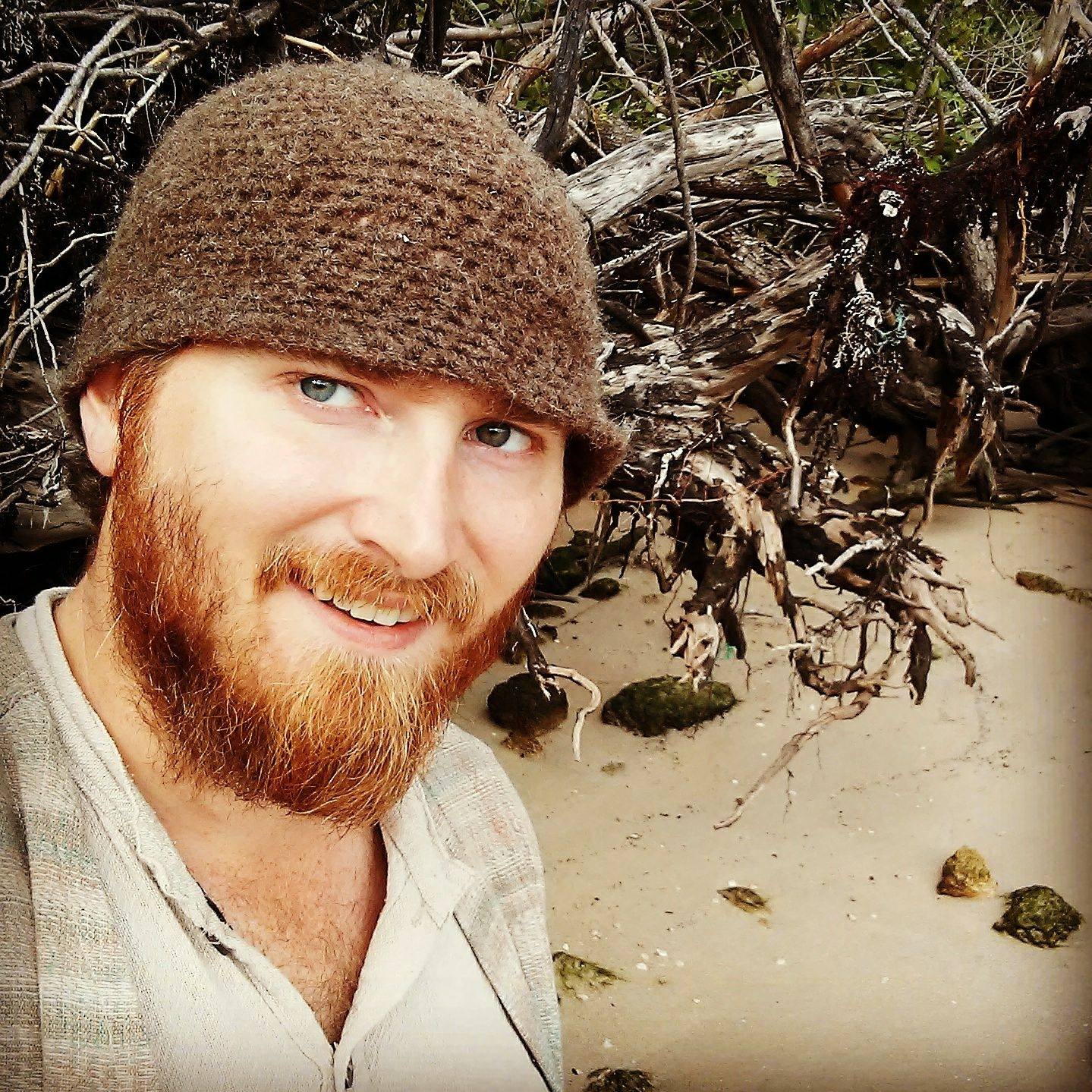
David Atlas is an ancestral health and movement coach and permaculture farmer. After years of living close to the land and helping others reverse metabolic disease through ancestral approaches to food and movement, life pulled him in a different direction. A difficult transition, a new city, and the slow drift of the standard American diet led to a type 2 diabetes diagnosis in 2026.
Instead of keeping it private, he started a podcast. Undomesticated documents his real time return to primal living; from inside a city, on a budget, with a bread-loving spouse; and brings in the best voices in ancestral health, wild food, natural movement, and human rewilding along the way.
David knows this world from the inside. He also knows what it looks like when it falls apart. That combination is what makes Undomesticated worth listening to.

Put Down the Supplement and Go Outside. Your Body Makes Vitamin D Better Than Any Pill.